

VISTA iQ
Lumps & Bumps Clinic
Every lump deserves an assessment. Not every lump needs an operation.
Finding a lump on your dog is unsettling. Most skin lumps turn out to be harmless, but some require treatment and it’s often impossible to know which is which simply by looking at them or feeling them.
It’s understandable that many owners decide to keep an eye on a lump, particularly if it isn’t bothering their dog. Sometimes it’s because the lump hasn’t changed. Sometimes it’s concern about the cost of investigations or the thought of invasive procedures.
The difficulty is that skin lumps don’t always behave as we expect. Some malignant tumours remain small or change very little in their early stages. Others that look alarming turn out to be completely benign. Even for experienced veterinary surgeons, feeling a lump alone cannot reliably determine how it is likely to behave.
Our aim is to remove some of the uncertainty.
Rather than waiting for a lump to become a bigger problem, we’d much rather assess it early, gather objective information and decide together whether it needs further investigation or whether it can be safely monitored.
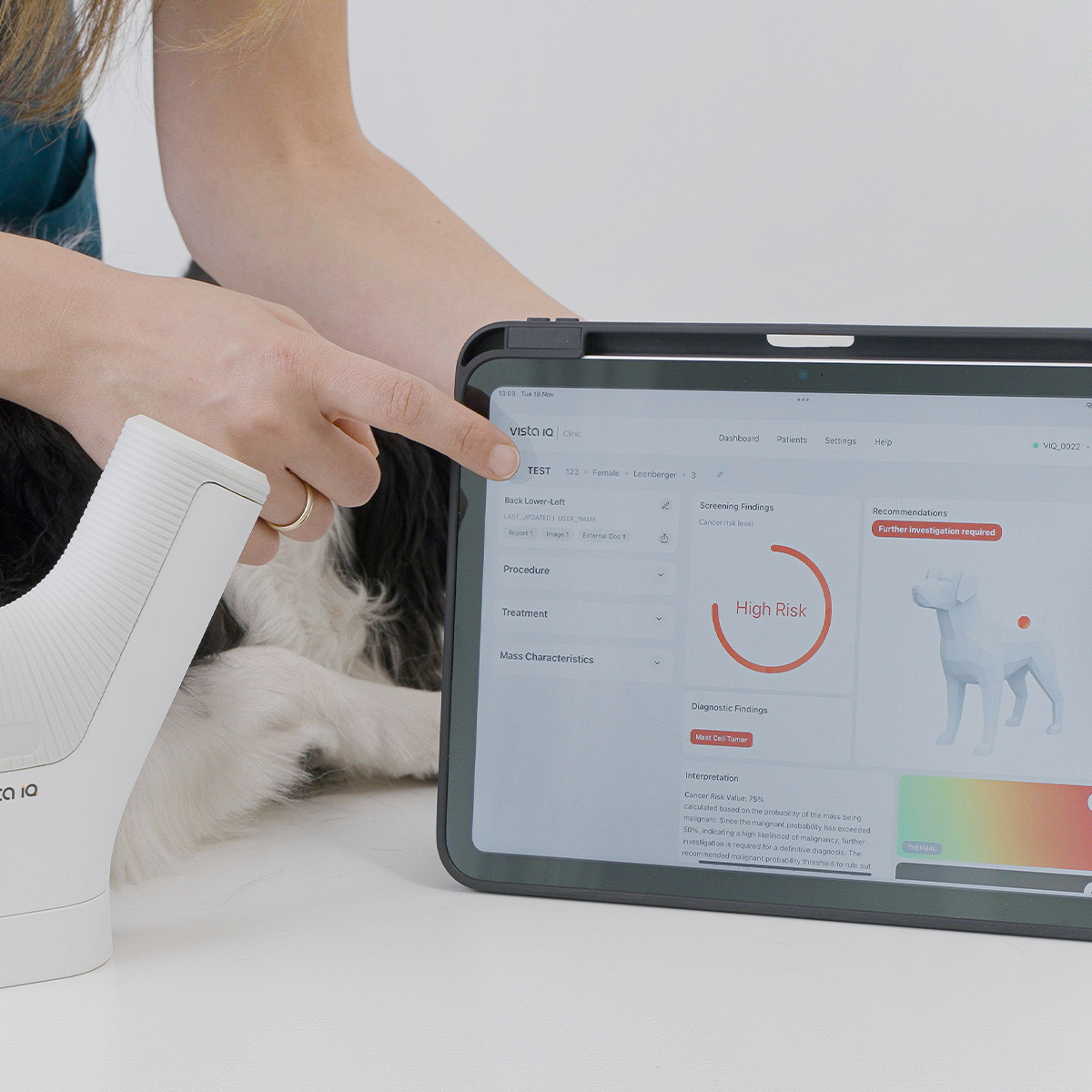
A different approach to skin lumps
Every lump deserves an assessment.
Not every lump needs an operation.
The challenge is knowing the difference.
That’s why we’ve introduced our Lumps & Bumps Clinic and invested in VISTA iQ, an advanced, non-invasive system designed to assess many suitable skin and subcutaneous lumps in dogs.
VISTA iQ provides objective clinical information that simply isn’t available by looking at or feeling a lump. Combined with your dog’s history and physical examination, it helps us decide whether a lump is suitable for monitoring or whether further investigation would be beneficial. Like any diagnostic test, it forms one part of the overall assessment and is interpreted alongside the clinical findings.
Good clinical decisions rarely rely on a single test. Every piece of reliable information helps reduce uncertainty and improves our understanding of what a lump is likely to be doing.
Traditionally, if there was any concern about a lump, the next step was often a veterinary consultation followed by investigations such as fine needle aspiration. Fine needle aspiration remains an excellent first-line diagnostic test and frequently provides an answer with only minimal discomfort. It does, however, involve inserting a needle into the lump, carries additional cost when consultation and laboratory fees are taken into account and, like any diagnostic test, doesn’t always provide a definitive answer.
VISTA iQ gives us another option.
It allows us to gather valuable objective information quickly, comfortably and without needles. This helps us decide which lumps are suitable for monitoring and which are more likely to benefit from further investigation.
The earlier we assess a lump, the earlier we can identify the patients that need treatment while avoiding unnecessary procedures for those that don’t.
Monitoring shouldn’t mean guessing
When owners are advised to monitor a lump, that often relies on remembering what it looked or felt like weeks or months ago. Even measuring a lump tells us little about what is happening beneath the surface.
VISTA iQ allows us to monitor many suitable lumps more objectively.
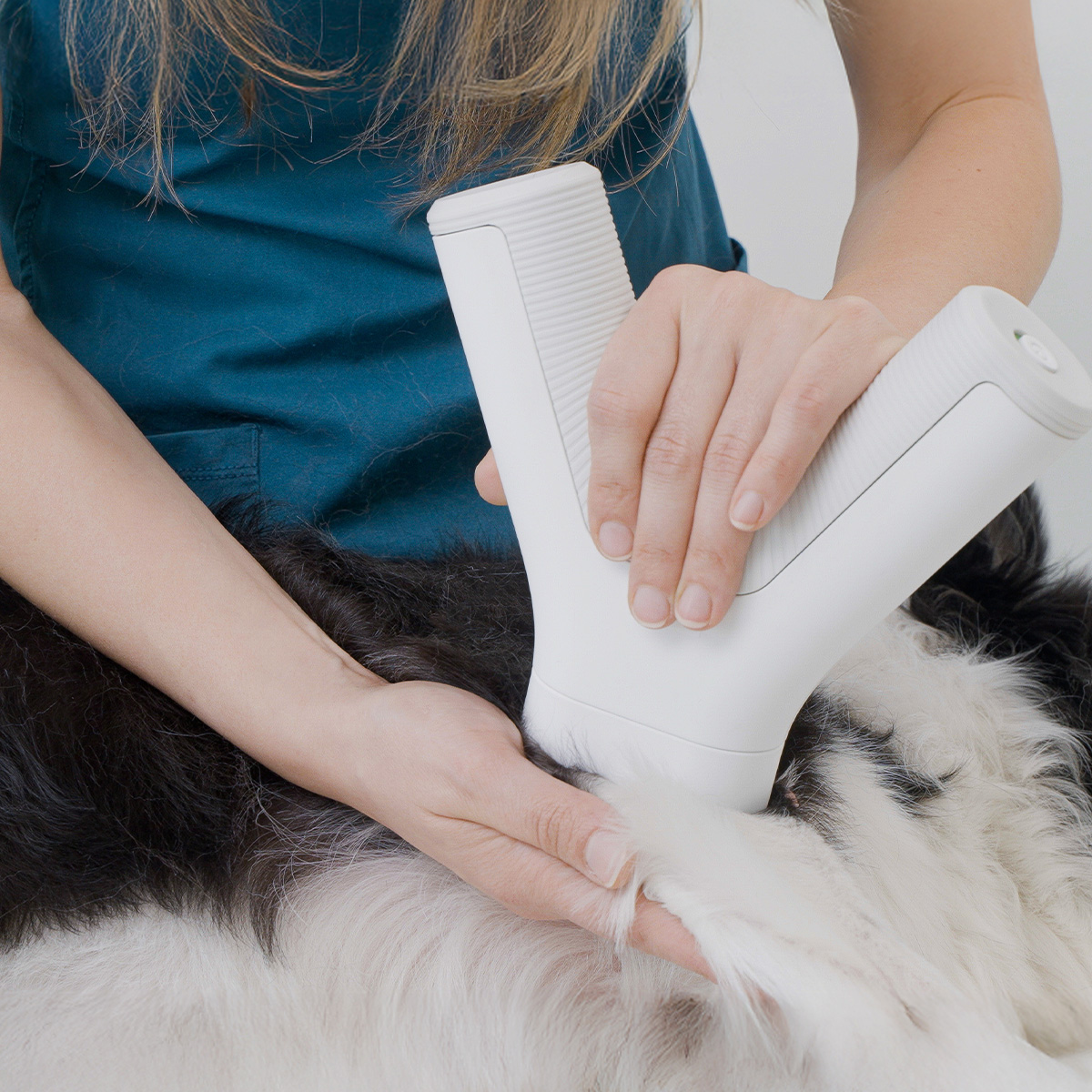
A small patch of hair is clipped over the lump before the scanner is gently placed against the skin. The scan takes around 40 seconds and most dogs tolerate it extremely well. Results are available within a couple of minutes.
Because the scan is non-invasive, it can be repeated whenever appropriate. That means monitoring becomes an active clinical decision rather than simply waiting to see what happens
What happens at the appointment?
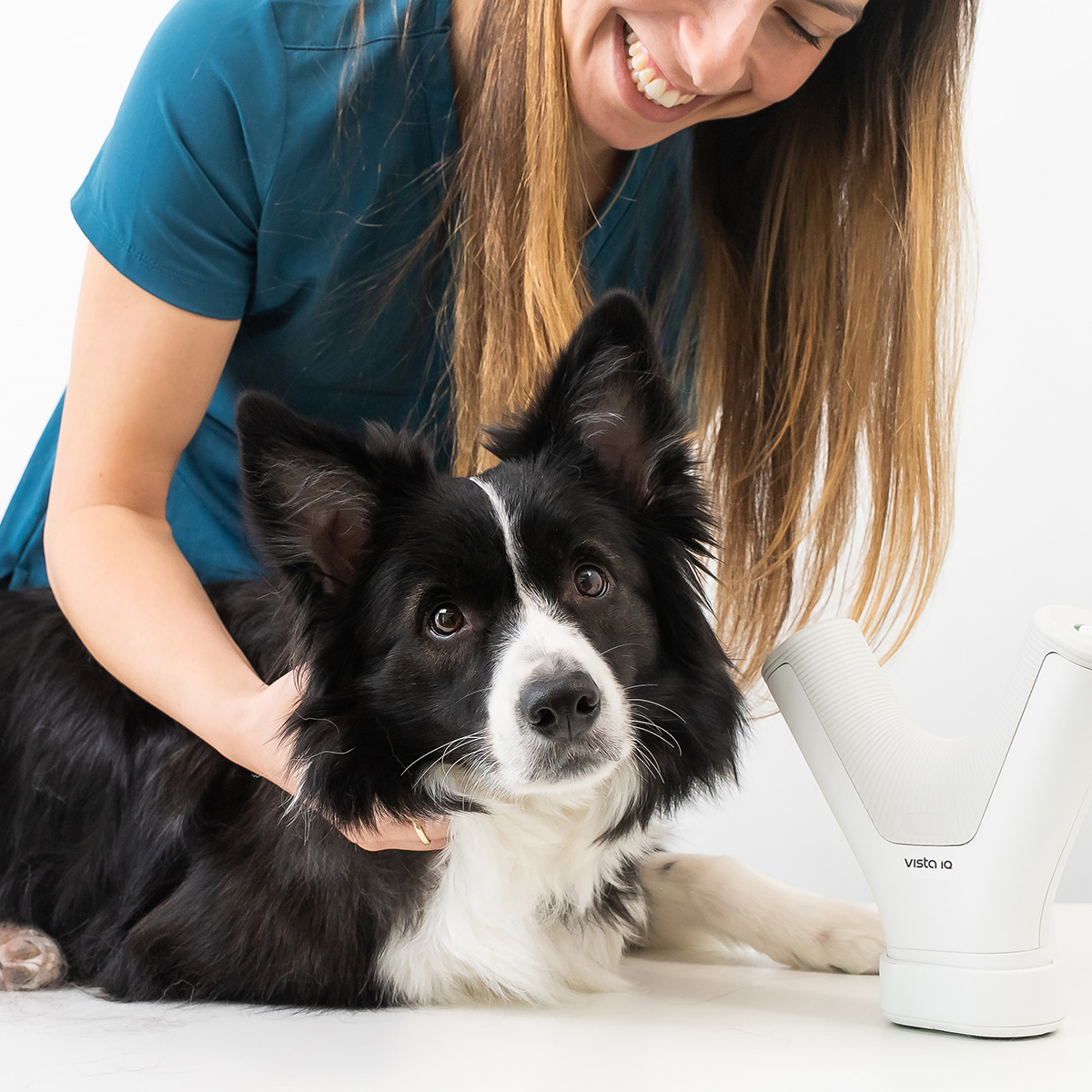
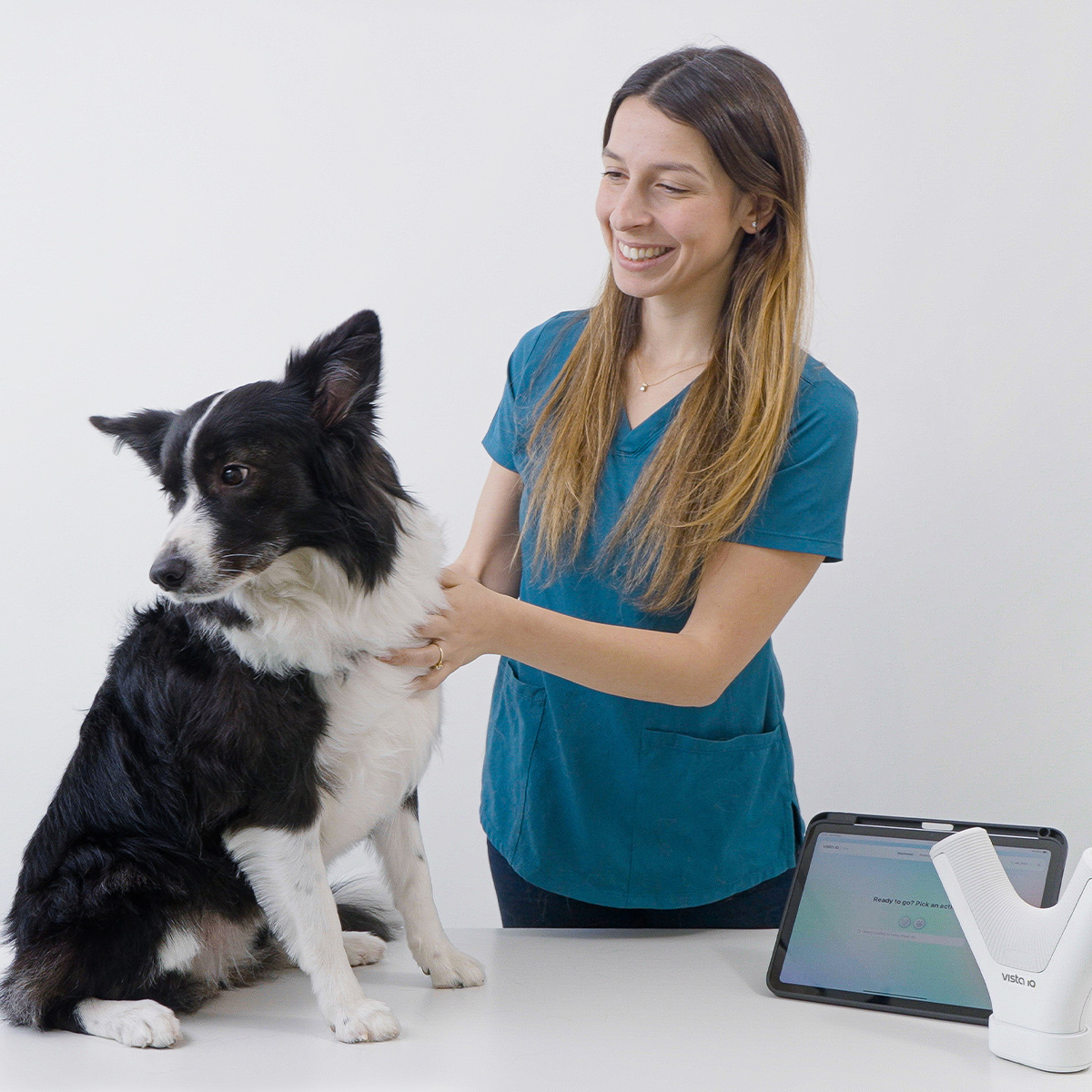
Most Lumps & Bumps Clinic appointments are led by one of our experienced veterinary nurses.
After discussing your concerns, they’ll examine your dog’s lump, clip a small patch of hair where needed and perform the VISTA iQ scan. Multiple suitable lumps can usually be assessed during the same appointment.
If the scan indicates a lower level of concern, there are no worrying findings on examination and you’re happy with the monitoring plan, we’ll usually recommend ongoing observation. Because the scan is quick and non-invasive, it can be repeated over time to provide an objective assessment if anything changes.
If the scan indicates an intermediate or higher level of concern, if the lump has concerning physical features, or if you remain concerned despite a reassuring scan, we’ll recommend a discussion with one of our veterinary surgeons.
Your vet will consider all of the information available, including your dog’s history, the physical examination and the VISTA iQ findings, before recommending the most appropriate next step. Depending on the individual patient, this may include:
- Fine needle aspiration (taking a small sample of cells with a fine needle)
- Biopsy
- Surgical removal
- Referral for further investigation or treatment where appropriate
Every recommendation is tailored to the individual patient. VISTA iQ supports our clinical decision-making but never replaces clinical judgement.
Why use VISTA iQ?
For suitable canine skin lumps, VISTA iQ helps us:
- Encourage earlier assessment before problems become more advanced.
- Add objective information to the clinical examination.
- Identify which dogs are more likely to benefit from further investigation.
- Monitor suitable lumps objectively over time.
- Assess multiple suitable lumps during the same appointment.
- Support proportionate clinical decision-making based on the level of concern.
- Reduce the need to move immediately to more invasive investigations where they may not be necessary.
Frequently Asked Questions
Will the scan hurt my dog?
No. The scan is completely non-invasive. It doesn’t require needles or sedation and is well tolerated by the vast majority of dogs.
Does my dog’s fur need clipping?
Yes. A small patch of hair is clipped over each lump so the scanner can assess the tissue accurately.
Can VISTA iQ be used in cats?
Not at present. VISTA iQ has been developed and validated for assessing suitable skin and subcutaneous lumps in dogs and has not yet been validated for use in cats.
For cats, fine needle aspiration remains the recommended first-line investigation for most skin and subcutaneous lumps. Depending on the findings, we may recommend further investigations such as biopsy or surgical removal to reach a definitive diagnosis.
If the scan doesn’t provide a diagnosis, why is it useful?
Because it helps us make better decisions about what should happen next.
Without VISTA iQ, owners are often faced with two choices: monitor the lump or proceed straight to more invasive investigations. VISTA iQ provides another step in between.
The scan gives us valuable objective information quickly, without needles and with very little discomfort for your dog. In many cases, that supports a decision to monitor a lump with greater confidence. Where the findings suggest a lump deserves closer attention, we can recommend further investigation knowing the decision is based on a more complete clinical picture.
No diagnostic test provides every answer. Our aim is to gather the right information, in the right order, so that each dog receives the level of investigation that is appropriate for them.
If you’ve found a lump
We’d always recommend having a new lump assessed sooner rather than later.
In many cases, we’ll be able to reassure you and monitor it over time. Where a lump needs further investigation, identifying it early often provides more treatment options and may allow intervention before the disease becomes more advanced.
If you’ve found a lump or bump on your dog, get in touch with our team. We’ll help you decide whether our Lumps & Bumps Clinic is right for your dog and guide you through the next steps.